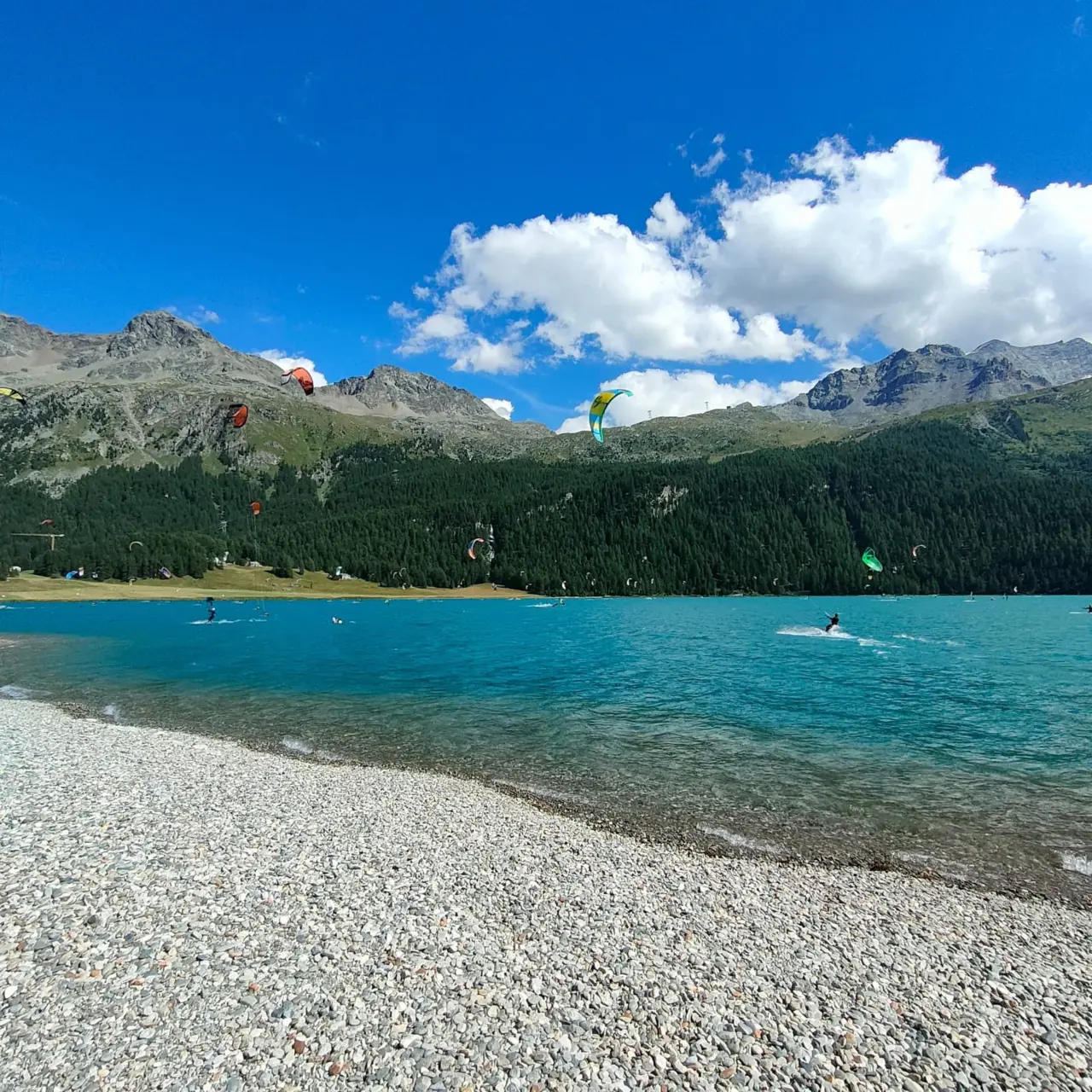
snowkite, kitesurf and wingfoil spots in Switzerland
No waves, no tides, but lakes as far as the eye can see and winds with names: Switzerland is a riding country like no other, where you sail facing the Alps, and where winter turns passes and frozen lakes into snowkite terrain.
260 spots listed, across 22 regions. Rideable days are computed from two full years of readings (2024 and 2025), spot by spot.
Switzerland: an overview
A country of lakes
People picture Switzerland without a sea, and therefore without board sports. The opposite is true: relative to its population, the country has one of the largest rider communities in Europe. Every big lake has its spots, clubs and regulars, who go riding after work the way others go for a run. Windsurfing has been established for decades, and wing foiling, which needs little wind and little space, has found ideal ground here.
Kiting has a more eventful history. It was banned on Swiss lakes from 2001 to 2016, and has since been allowed only in zones defined by each canton. That long gap explains a kite scene that is still young on the lakes, and very attached to the rules that gave it back the water.
Winds with names
In Switzerland, people don't say it's windy: they say which wind. The bise, cold and dry, blows down from the northeast between the Jura and the Alps and speeds up towards Geneva. The joran drops from the Jura onto Lakes Neuchâtel and Biel, sometimes within minutes. The föhn, a warm, gusty southerly, climbs the valleys to Lake Uri. And in the Engadine, the Maloja wind picks up every summer afternoon on Lake Silvaplana, as regular as clockwork.
Each lake therefore has its own weather, and every rider learns to read their spot's. That is what makes Swiss riding so rich, and so demanding.
In winter, the snow
When the lowland lakes calm down, the mountains take over. Alpine passes, the high plateaus of the Jura and Lake Silvaplana, frozen for much of the winter, become snowkite terrain renowned far beyond the borders. Switzerland is one of the few countries where you can ride all year without ever seeing the sea.
The best regions
Lake Geneva
Western Europe's largest lake, shared with France. From Geneva to Lausanne, city spots where the bise rushes in, with the Savoy Alps and Mont Blanc as a backdrop on clear days.
Lake Neuchâtel
The largest lake entirely within Switzerland. Sandy beaches, rare in the country, a southern shore lined with protected marshes, and a lake long enough for the wind to build.
Lake Biel
At the foot of the vineyards and the Jura, a more intimate lake with St. Peter's Island at its centre. Village spots, quiet and loyal.
Central Switzerland
Lake Uri, a steep-sided fjord where the föhn blows, and the gentler lakes of the Lucerne plateau. Postcard landscapes and very varied conditions.
The Engadine
At almost 1,800 metres, Lake Silvaplana and its Maloja wind. The country's most famous board sports destination, summer and winter.
The Alps and the Jura in winter
Snowy passes, high plateaus and frozen lakes: snowkite territory, from the Simplon Pass to the Joux Valley.
By region
The spots not to miss
-
Le Vengeron, Geneva
Genève
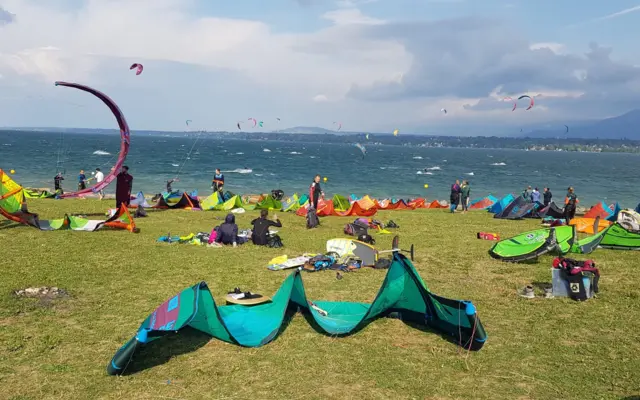
A landscaped beach at the entrance to Geneva, where the bise blows hardest. The after-work meeting point for Geneva riders, with the city minutes away and mountains on the horizon.
-
Versoix – Bécassine beach (Geneva)
Genève
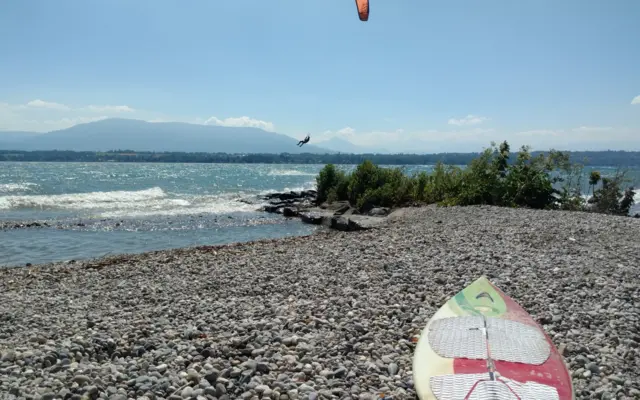
A natural pebble shore near the mouth of the Versoix. In a bise, one of the liveliest spots on Lake Geneva, with a fine view of the Alps on clear days.
-
Préverenges (Vaud)
Vaud
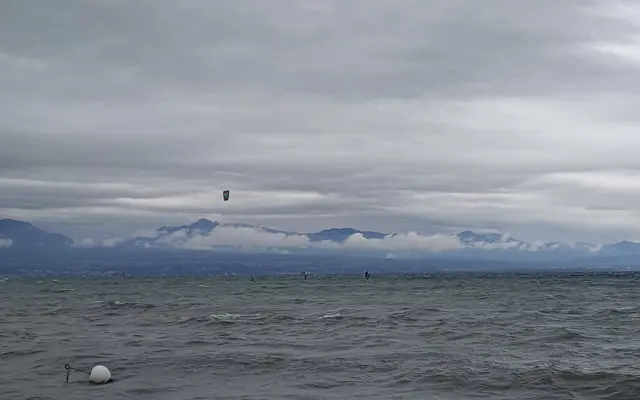
Between Morges and Lausanne, a beach bordered by lawns facing the Savoy Alps. An accessible, family-friendly spot, busy as soon as the wind picks up.
-
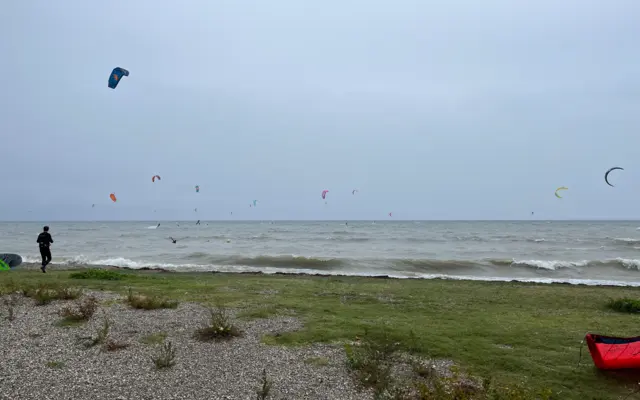
Saint-Sulpice – Laviau beach (Vaud)
Vaud
West of Lausanne, a shallow shore near the mouth of the Venoge. A stretch of water popular with riders from the Lausanne area.
-
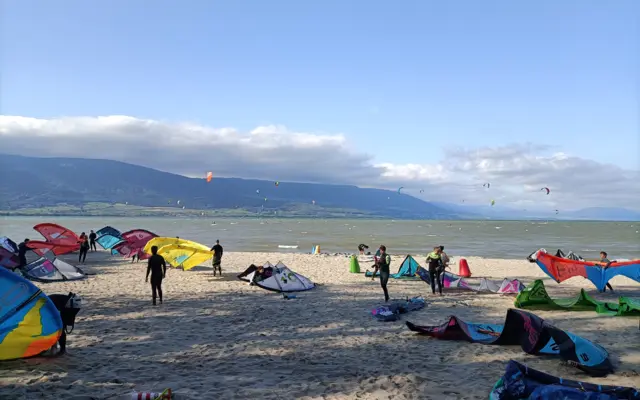
Yvonand (Vaud)
Vaud
On the southern shore of Lake Neuchâtel, near Yverdon, a long sandy beach and shallow water far out. A rarity in Switzerland, and one of the best learning spots in the country.
-
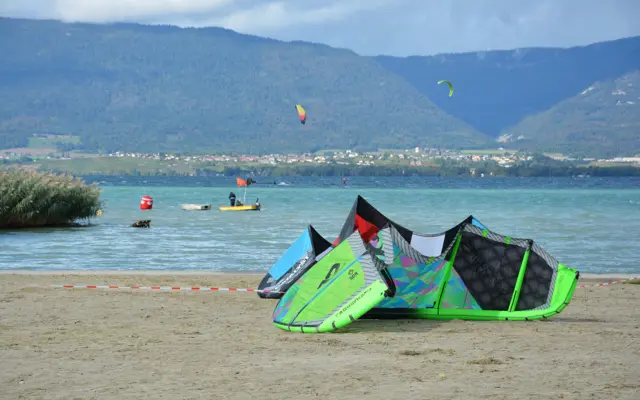
Portalban (Fribourg)
Friburg
A small harbour on the southern shore of Lake Neuchâtel, beside the protected marshes of the Grande Cariçaie. Shallow water, wide open space and unspoilt nature.
-
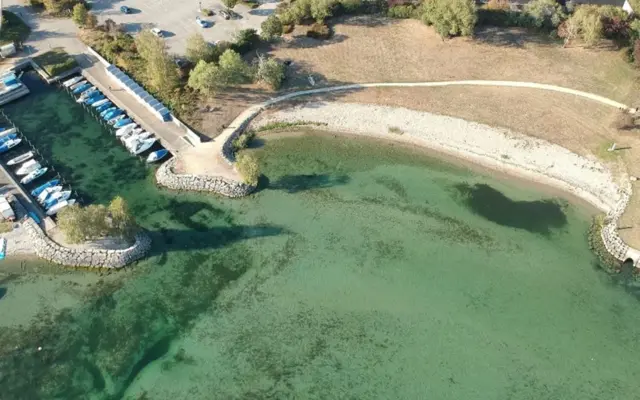
Saint-Blaise (Neuchâtel)
Neuchâtel
At the northeastern end of the lake, near Neuchâtel. The wind crosses the whole length of the lake before it arrives: a spot that comes into its own in a southwesterly.
-
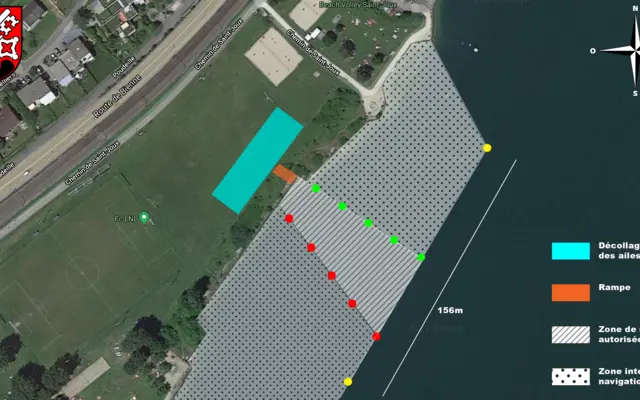
La Neuveville (Bern)
Bern
A medieval town surrounded by vineyards, on the northern shore of Lake Biel, facing St. Peter's Island. Peaceful riding in one of the country's most charming settings.
-
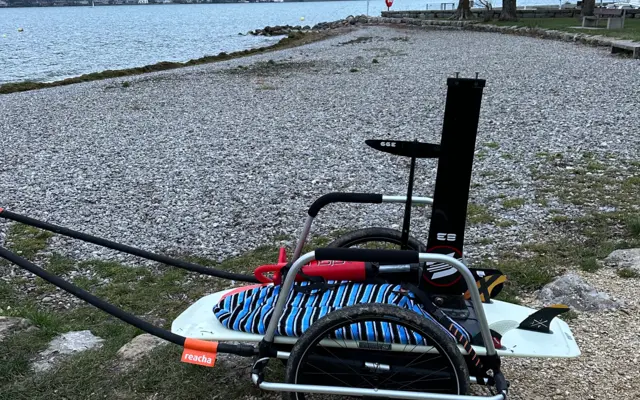
Ipsach (Bern)
Bern
On the southern shore of Lake Biel, at the gates of the city. A beach and lawns where the local community gathers whenever the wind allows.
-
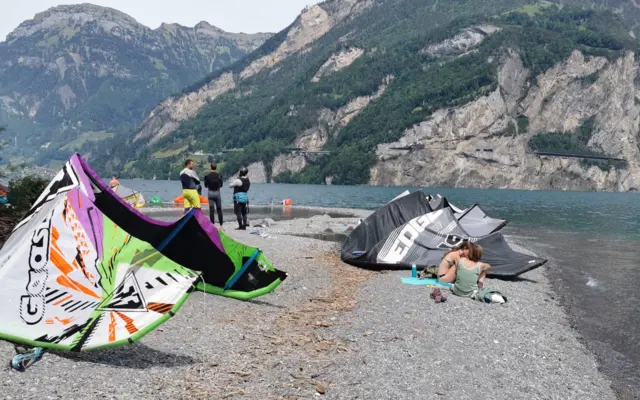
Lake Uri – Isleten (Uri)
Uri
On Lake Uri, the wildest arm of Lake Lucerne, between rock walls plunging into the water. The föhn blows hard and in gusts: a spectacular spot for experienced riders.
-
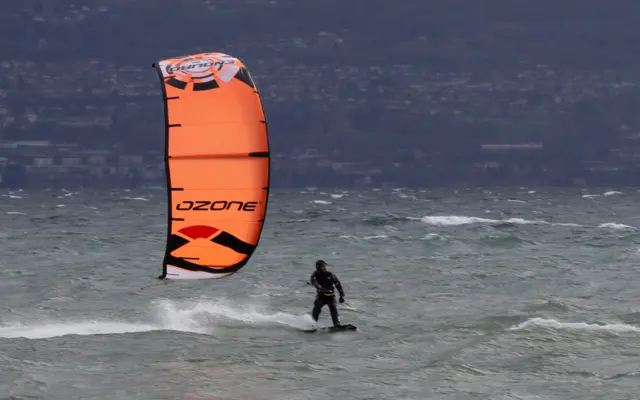
Lake Sempach (Lucerne)
Luzern
A lake with gentle shores among the Lucerne hills. Calmer than the big lakes, ideal for an easy session or for trying wing foiling.
-
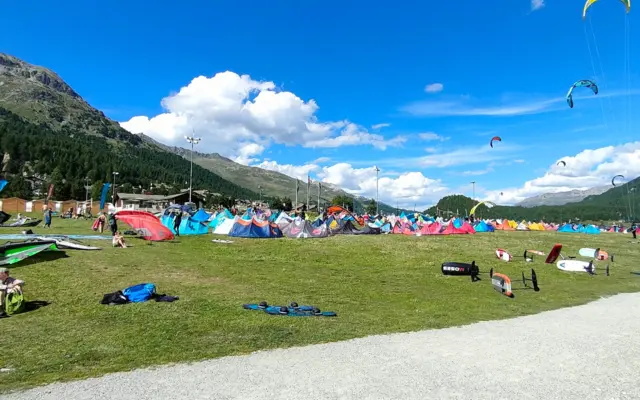
Silvaplana (Graubünden)
Grisons
At almost 1,800 metres in the Upper Engadine, a turquoise lake among the peaks, where the Maloja wind picks up every summer afternoon. Switzerland's most famous spot, with separate zones for kiting and windsurfing — and, in winter, a frozen lake for snowkiting.
When to ride
2024-2025 average| Region | J | F | M | A | M | J | J | A | S | O | N | D |
|---|---|---|---|---|---|---|---|---|---|---|---|---|
| Vaud 78 | 10 | 6 | 8 | 8 | 7 | 9 | 7 | 6 | 7 | 7 | 7 | 6 |
| Valais 36 | 8 | 6 | 7 | 9 | 9 | 5 | 3 | 1 | 3 | 3 | 6 | 6 |
| Grisons 19 | 9 | 8 | 12 | 12 | 10 | 8 | 6 | 5 | 6 | 5 | 6 | 5 |
| Neuchâtel 17 | 9 | 4 | 5 | 7 | 6 | 7 | 5 | 4 | 6 | 6 | 5 | 4 |
| Berne 11 | 11 | 5 | 7 | 8 | 5 | 6 | 7 | 6 | 4 | 3 | 4 | 5 |
| Thurgau 9 | 10 | 7 | 4 | 4 | 7 | 6 | 7 | 3 | 5 | 6 | 4 | 6 |
| Fribourg 8 | 8 | 4 | 4 | 4 | 1 | 2 | 1 | 1 | 1 | 1 | 3 | 3 |
| Genève 7 | 13 | 8 | 14 | 13 | 12 | 16 | 14 | 12 | 11 | 12 | 8 | 8 |
The windiest spots
2024-2025 average| Spot | Region | Rideable days |
|---|---|---|
| Boiron | Vaud | 209 d/yr |
| St-Prex - Plage du Coulet | Vaud | 204 d/yr |
| Lac de Joux - La pointe de Sable | Vaud | 202 d/yr |
| Morges | Vaud | 200 d/yr |
| Saint-Prex | Vaud | 200 d/yr |
| Port-Choiseul a Versoix | Genève | 185 d/yr |
| Tannay | Vaud | 185 d/yr |
| Hermance | Genève | 183 d/yr |
| Perroy | Vaud | 175 d/yr |
| Coppet - Plage des Rocailles | Vaud | 172 d/yr |
Average rideable days per year, computed from 2024-2025 readings. A day counts as rideable when it has at least two consecutive hours of wind at 7 knots or more, blowing from a direction that works for the spot.
Good to know
- Cantonal zones: since 2016, kiting on the lakes is only allowed in zones set by the cantons, often marked with yellow buoys. Some windsurf zones ban kiting, as at Silvaplana.
- Storm warning lights: around the big lakes, orange lights flash to warn riders. 40 flashes a minute: caution. 90 flashes a minute: storm, head back to shore.
- Joran, bise and föhn: the joran can rise within minutes, and the bise and föhn are often gusty. Watch the sky, not just the forecast.
- Nature reserves: the southern shore of Lake Neuchâtel is home to the Grande Cariçaie, several sectors of which are closed to riding.
- Cold water: the lakes stay cool for much of the year, and Silvaplana is icy even in summer. A wetsuit is essential.
- Snowkite: in the mountains, check the avalanche risk, stay away from ski areas, and on frozen lakes follow the local authorities' instructions.
All spots
260 spots-
 Glacier de la Plaine Morte
Berne
400 d/yr
Snowkite
-
 Yvonand
Vaud
252 d/yr
Kitesurf · Lake
-
 Boiron / Lake Geneva
Vaud
209 d/yr
Kitesurf · Wingfoil · Lake
-
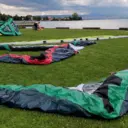 St-Prex - Plage du Coulet
Vaud
204 d/yr
Kitesurf · Lake
-
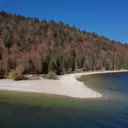 Lac de Joux - La pointe de Sable
Vaud
202 d/yr
Kitesurf · Wingfoil · Lake
-
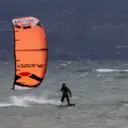 Morges / Lake Geneva
Vaud
200 d/yr
Kitesurf · Wingfoil · Lake
-
Saint-Prex - Place d'armes / Lake Geneva
Vaud
200 d/yr
Windfoil · Paddle · Lake
-
Plage du Vd8
Vaud
200 d/yr
Windfoil · Paddle · Lake
-
Port-Choiseul, Versoix / Lake Geneva
Genève
185 d/yr
Kitesurf · Wingfoil · Lake
-
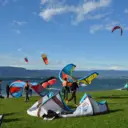 Hermance
Genève
183 d/yr
Kitesurf · Lake
-
Perroy / Lake Geneva
Vaud
175 d/yr
Kitesurf · Wingfoil · Lake
-
Wingreis-Engelberg
Bern
175 d/yr
Wingfoil · Windsurf · Lake
-
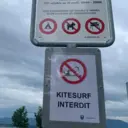 Coppet - Plage des Rocailles
Vaud
172 d/yr
Windfoil · Paddle · Lake
-
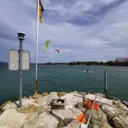 Cudrefin
Waadt
170 d/yr
Kitesurf · Lake
-
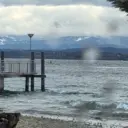 Chez-le-Bart / Lake Neuchâtel
Neuenburg
170 d/yr
Sup foiling · Kitesurf · Lake
-
Le Refuge / Lake Neuchâtel
Vaud
167 d/yr
Windfoil · Paddle · Lake
-
Nyon / Lake Geneva
Vaud
161 d/yr
Kitesurf · Wingfoil · Lake
-
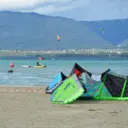 Portalban
Friburg
156 d/yr
Paddle · Pumping · Lake
-
Céligny / Lake Geneva
Genève
150 d/yr
Kitesurf · Wingfoil · Lake
-
Cortaillod / Lake Neuchâtel
Neuchâtel
150 d/yr
Kitesurf · Wingfoil · Lake
-
Visperterminen - Gebidumsee
Valais
148 d/yr
Snowkite
-
Lukmanier Pass Snowkite
Grisons
147 d/yr
Snowkite · Lake
-
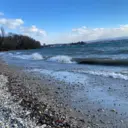 Tolochenaz - Shooting Range
Vaud
144 d/yr
Kitesurf · Lake
-
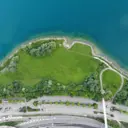 Nid du Cro
Neuchâtel
143 d/yr
Kitesurf
Sports, by number of spots
- Snowkite 161
- Kitesurf 89
- Wingfoil 70
- Windsurf 64
- Windfoil 24
- Paddle 14
- Parawing 13
- Pumping 8
- Sup foiling 2
- Surf 2