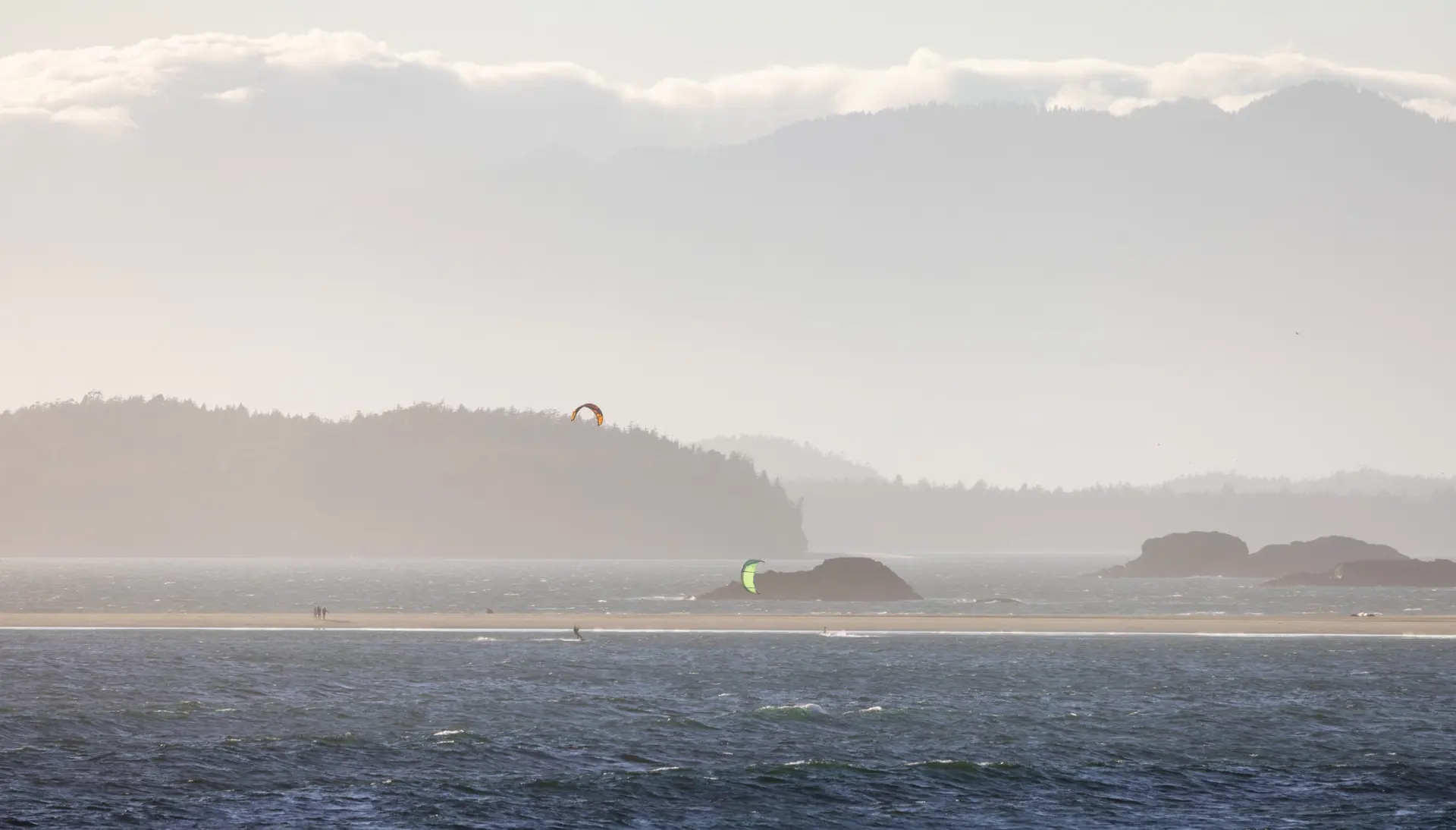
kitesurf, wingfoil and windsurf spots in United Kingdom
Atlantic-battered islands, huge beaches uncovered by the tide for miles, sheltered Olympic harbours: the United Kingdom offers some of the most varied riding in Europe, for anyone willing to accept cold water and changing skies.
509 spots listed, across 8 regions. Rideable days are computed from two full years of readings (2024 and 2025), spot by spot.
United Kingdom: an overview
A nation of sailors, and pioneers
The United Kingdom has a close relationship with the sea, and riding here goes back a long way. The south coast of England is credited with one of the very first sailboards in history, and the country has produced generations of windsurfers, then kiters, among the best in the world. Its federations are long-established and well organised, and schools follow demanding training standards.
The sport is widespread, driven by weather that, if not always kind, is almost always windy. People ride all year round, often in full wetsuits, boots and hoods, with a tenacity that has built British riders' reputation.
Tides first
The first thing to understand is the tides. The tidal range is among the largest in Europe, and it completely transforms spots through the day. At low tide, beaches like Camber Sands or West Wittering uncover vast expanses of sand and flat, shallow water; at high tide, the same place becomes narrow and choppy. Almost every spot has its "right" tide, and locals know it by heart.
From the Atlantic to sheltered harbours
Geography does the rest. In the west, Cornwall, Wales and the Scottish islands take the Atlantic swell: powerful waves among cliffs and moorland. In the south and east, great natural harbours and shallow bays offer sheltered water, perfect for learning, freestyle and wing foiling.
The best regions
The Hebrides and Scotland
Remote islands, white sand beaches and remarkably clean Atlantic swell. Tiree is its legendary figure, far from everything.
Wales and Anglesey
Wild coasts exposed to the southwest, first-class waves and villages devoted to water sports.
East Anglia
Huge beaches and marshes on the Norfolk coast, with the curiosity of an east coast that watches the sun set over the sea.
The south coast of England
From Sussex to Dorset, via the Isle of Wight: big sandy beaches, natural harbours and spots one or two hours from London. The busiest region in the country.
Cornwall and Devon
The southwest, its coves, cliffs and surf culture. Waves, slightly milder water and spectacular landscapes.
By region
The spots not to miss
-
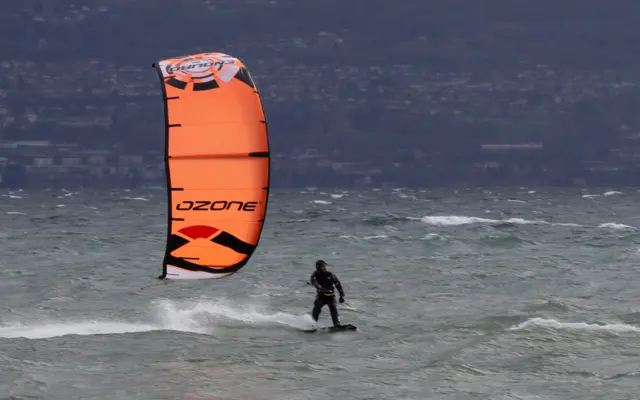
Balephuil Bay, Tiree (Hebrides)
Scotland
On an island in the Inner Hebrides, a white sand bay open to the Atlantic swell. For decades Tiree has hosted one of the oldest wave windsurfing competitions in the world.
-
Rhosneigr, Anglesey (Wales)
Wales
A water sports village lined with sandy beaches. In a southwesterly, one of the best wave spots in the country, with a welcoming board sports atmosphere.
-
Hunstanton (Norfolk)
England
Beneath red-and-white striped cliffs, an east coast beach facing west over the Wash. You ride into the sunset, a rarity on this coast.
-
Camber Sands (East Sussex)
England
Dunes and a huge beach that uncovers vast sand flats and shallow water at low tide. One of the best-known kite beaches in the UK.
-
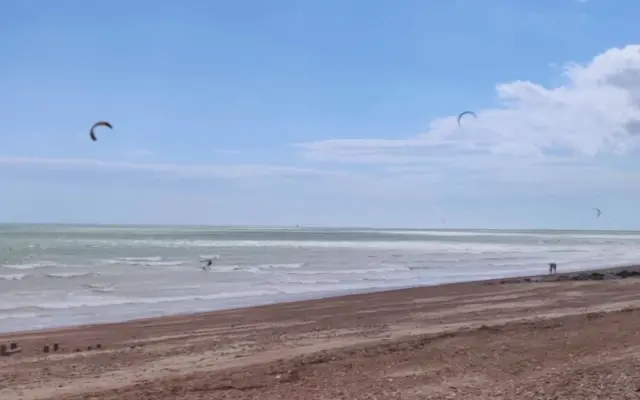
Lancing (West Sussex)
England
A shingle beach near Brighton, home to a loyal local community. Varied sea conditions, within train reach of London.
-
West Wittering (West Sussex)
England
At the entrance to Chichester Harbour, a beach that reveals huge sandbanks and near-flat water at low tide. One of the best learning spots on England's south coast.
-
Hayling Island (Hampshire)
England
The island credited with one of the first sailboards in history. A long beach facing the Solent, and a riding culture that goes back to the origins of the sport.
-
Brook, Isle of Wight
England
On the island's southwest coast, below cliffs rich in dinosaur fossils. A wild beach and waves, in a setting that feels timeless.
-
Sandbanks, Poole Harbour (Dorset)
England
At the entrance to one of the largest natural harbours in the world. Sheltered, shallow water, ideal for learning and wing foiling, governed by harbour rules.
-
Portland Harbour (Dorset)
England
The water that hosted the sailing events of the 2012 Olympic Games, protected by huge breakwaters. Flat water, space, and wind that blows in without the swell.
-
Marazion (Cornwall)
England
Facing St Michael's Mount across Mount's Bay. A castle silhouette on the water and varied conditions, in one of the most beautiful settings in the country.
-
Watergate Bay (Cornwall)
England
Near Newquay, a big sandy beach below the cliffs, a hotspot of British surfing. Waves and wide open space on the Atlantic coast.
When to ride
2024-2025 average| Region | J | F | M | A | M | J | J | A | S | O | N | D |
|---|---|---|---|---|---|---|---|---|---|---|---|---|
| England 259 | 15 | 16 | 18 | 20 | 21 | 21 | 23 | 21 | 18 | 16 | 15 | 16 |
| Scotland 132 | 18 | 17 | 21 | 21 | 24 | 24 | 23 | 22 | 19 | 18 | 17 | 16 |
| Wales 49 | 19 | 20 | 20 | 20 | 21 | 23 | 22 | 24 | 20 | 19 | 17 | 19 |
| Northern Ireland 38 | 16 | 16 | 20 | 18 | 21 | 21 | 21 | 19 | 18 | 16 | 16 | 15 |
| District de Limassol 8 | 20 | 21 | 25 | 28 | 29 | 25 | 30 | 30 | 28 | 28 | 22 | 15 |
| Angleterre 6 | 14 | 15 | 19 | 22 | 22 | 20 | 23 | 21 | 17 | 14 | 14 | 14 |
| Pays de Galles 6 | 16 | 18 | 18 | 18 | 20 | 25 | 22 | 25 | 18 | 19 | 15 | 18 |
| Écosse 5 | 21 | 18 | 20 | 20 | 23 | 27 | 25 | 24 | 19 | 20 | 20 | 20 |
The windiest spots
2024-2025 average| Spot | Region | Rideable days |
|---|---|---|
| Minn Beach | Scotland | 356 d/yr |
| BU Sands | Scotland | 351 d/yr |
| 4th Churchill Barrier | Scotland | 344 d/yr |
| Scapa | Scotland | 342 d/yr |
| The Loch / Tiree | Scotland | 342 d/yr |
| Meil Bay | Scotland | 340 d/yr |
| Stithians Reservoir | England | 338 d/yr |
| Stoke | England | 338 d/yr |
| canvey island | England | 334 d/yr |
| Welton Water | England | 334 d/yr |
Average rideable days per year, computed from 2024-2025 readings. A day counts as rideable when it has at least two consecutive hours of wind at 7 knots or more, blowing from a direction that works for the spot.
Good to know
- Tides: the tidal range is very large. Most spots are only good at certain tide states; schools and locals know which one.
- Cold water: a full wetsuit almost all year, plus boots, gloves and a hood in winter.
- Federations and schools: schools affiliated with the national federations follow high training standards and know each spot's rules.
- Regulated zones: lifeguarded swimming zones in summer, and harbour authority rules, notably in Poole and Portland.
- Changeable weather: conditions turn quickly. Offshore wind, which carries you away from shore, is particularly dangerous.
All spots
509 spots-
 England
271 d/yr
Kitesurf · Wingfoil · Sea
-
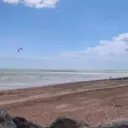 Lancing beach
England
225 d/yr
Kitesurf · Lake
-
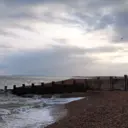 St. Leonards on Sea / East Sussex
England
210 d/yr
Kitesurf · Sea
-
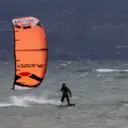 Ship Wreck
District de Limassol
605 d/yr
Kitesurf · Wingfoil · Lake
-
Minn Beach
Scotland
356 d/yr
Kitesurf · Wingfoil · Sea
-
BU Sands
Scotland
351 d/yr
Kitesurf · Wingfoil · Sea
-
4th Churchill Barrier
Scotland
344 d/yr
Kitesurf · Wingfoil · Sea
-
Scapa
Scotland
342 d/yr
Kitesurf · Wingfoil · Sea
-
The Loch / Tiree
Scotland
342 d/yr
Kitesurf · Wingfoil · Lake
-
Meil Bay
Scotland
340 d/yr
Kitesurf · Wingfoil · Sea
-
Stithians Reservoir
England
338 d/yr
Kitesurf · Wingfoil · Lake
-
Stoke
England
338 d/yr
Kitesurf · Lake
-
canvey island
England
334 d/yr
Kitesurf · Wingfoil · Sea
-
Welton Water
England
334 d/yr
Kitesurf · Wingfoil · Lake
-
Welton Water
England
334 d/yr
Kitesurf · Wingfoil · Lake
-
The Green / Tiree
Scotland
326 d/yr
Kitesurf · Wingfoil · Lake
-
tiree | the green
Scotland
326 d/yr
Kitesurf · Wingfoil · Lake
-
Loch Thom
Scotland
325 d/yr
Kitesurf · Wingfoil · Lake
-
Bembridge The Pond
England
323 d/yr
Kitesurf · Wingfoil · Lake
-
Hoo Marina
England
322 d/yr
Kitesurf · Wingfoil · Lake
-
Beeley Moor Snowkite
England
314 d/yr
Landkite · Lake
-
Oxford Island / Lough Neagh
Northern Ireland
312 d/yr
Kitesurf · Wingfoil · Lake
-
Killington Lake
England
308 d/yr
Kitesurf · Wingfoil · Lake
-
Quendale
Scotland
308 d/yr
Surf · Kitesurf · Sea
Sports, by number of spots
- Kitesurf 507
- Wingfoil 488
- Windsurf 152
- Surf 92
- Landkite 16
- Windfoil 1