
The site has just been updated: reload the page to get everything working again.
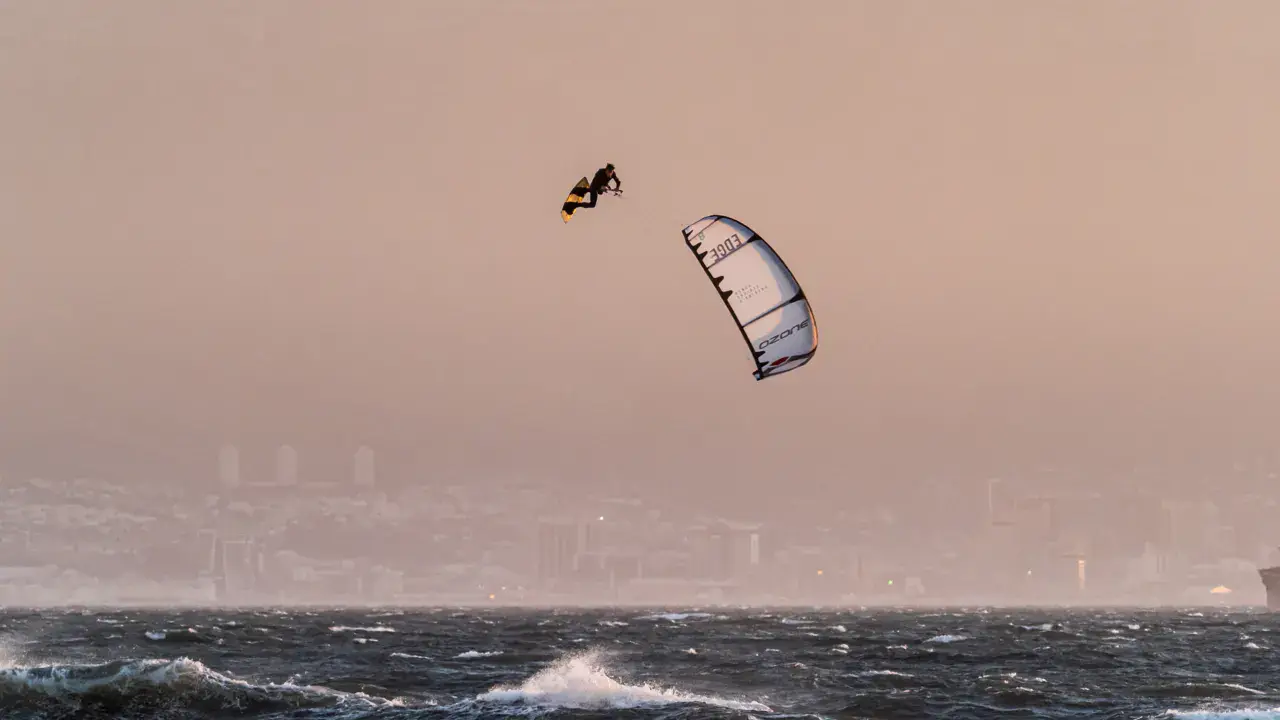
Canuha (Calheta Funda) / Sal kitesurf, windsurf and surf spot
Cape Verde · Sal
Overview
Canuha, also known as Calheta Funda, is a small bay on the west coast of Sal Island, Cape Verde. It sits between the Murdeira/Canoa area to the north and Ponta Preta to the south.
The spot produces a powerful left-hand wave breaking into the bay over reef. When the swell is under 2m, it's accessible to competent wave riders. Above 2m, it becomes a serious, fast wave reserved for experts.
One of Calheta Funda's key advantages is its small beach — one of the rare places on the west coast (alongside Fontona) where you can comfortably launch from sand. The dramatic volcanic cliffs surrounding the bay create a spectacular, wild setting.
The spot sees less traffic than Ponta Preta, making it attractive for riders seeking uncrowded waves. It's also popular with surfers for its consistent, well-shaped left.
Spot forecast for Canuha (Calheta Funda) / Sal
Sunrise 06:24 · Sunset 18:09
Forecasts provided by Open-Meteo
Tides
Heights above lowest astronomical tide, in the spot's local time. Computed 6.3 km from the spot.
- Saturday 17 October Low tide · 0.3 m High tide · 0.6 m Low tide · 0.3 m
- Sunday 18 October High tide · 0.7 m Low tide · 0.3 m High tide · 0.5 m Low tide · 0.3 m
- Monday 19 October High tide · 0.7 m Low tide · 0.4 m High tide · 0.5 m Low tide · 0.4 m
- Tuesday 20 October High tide · 0.7 m Low tide · 0.4 m High tide · 0.6 m Low tide · 0.4 m
- Wednesday 21 October High tide · 0.7 m Low tide · 0.3 m High tide · 0.6 m Low tide · 0.3 m
Canuha (Calheta Funda) / Sal: when to go?
Rideable days and hours computed for a minimum wind of 7 knots · log in to set your own (foil, twin-tip…)
378h
in January · 31 rideable days
The spot works year-round: 29 rideable days a month on average, at 28 °C. It peaks in January, with 378 hours of usable wind.
Rideable days per month
Wind strength when it is rideable
When the spot works, wind sits mostly between 13 and 20 knots — 53% of rideable hours. That is the most versatile range, where most kites work. The coldest month is March, at 25 °C. The wettest month is September, with 51 mm.
Monthly averages: Canuha (Calheta Funda) / Sal
| Month | Rideable days | Usable wind | Temperature | Rain |
|---|---|---|---|---|
| January | 31.0 | 378 h | 26 °C | 0 mm |
| February | 28.5 | 390 h | 26 °C | 0 mm |
| March | 31.0 | 434 h | 25 °C | 0 mm |
| April | 30.0 | 408 h | 27 °C | 5 mm |
| May | 31.0 | 452 h | 27 °C | 0 mm |
| June | 30.0 | 458 h | 27 °C | 0 mm |
| July | 25.0 | 299 h | 28 °C | 5 mm |
| August | 24.0 | 253 h | 29 °C | 35 mm |
| September | 26.0 | 316 h | 30 °C | 51 mm |
| October | 29.5 | 386 h | 30 °C | 15 mm |
| November | 29.0 | 372 h | 29 °C | 20 mm |
| December | 31.0 | 404 h | 26 °C | 6 mm |
Photo gallery of Canuha (Calheta Funda) / Sal
Ridden here? One photo or video, and the spot comes alive for everyone discovering it.
Technical details of Canuha (Calheta Funda) / Sal spot
The spot works with winds from N, NNE, NE, ENE, NNW.
Spot functioning
Launch from the small beach in the bay — one of the few sand launches on the west coast. Get through the shore break and head to the lineup.
The main wave is a powerful left breaking into the bay. When swell is moderate (1–2m), it's a fun, well-shaped wave accessible to advanced riders. When swell exceeds 2m, it becomes fast and powerful — experts only.
Directional board essential. The wave quality makes it excellent for strapless wave riding.
Calheta Funda can also be reached by riding downwind from Fontona (via Curral Joul, Ali Baba) or accessed as part of a west coast exploration session.
Return: the beach launch makes it easier to land back here than at most west coast spots. Alternatively, continue south toward Ponta Preta or arrange a car pickup.
Spot opening date · Required level
- Spot opening date
- Open all year round
Year-round, main season November to June with NE trade winds. Best wave conditions December to March when NW groundswell is most consistent.
- Required level
- Advanced
On the water
Open Atlantic with northwest groundswell. The main wave is a left-hander breaking over reef into the bay. Wave height 1–2.5+ metres depending on swell.
Water temperature 22–27°C depending on season. Shorty or 3mm top in winter, boardshorts in summer. The offshore wind chill can make it feel cooler.
Rocky reef bottom. Crystal-clear water.
Parking
From Santa Maria, drive north toward Espargos/the airport, then turn left (west) following signs or dirt tracks toward the coast. A vehicle with clearance is recommended — the last section is unpaved.
The bay has a small beach area where you can set up. No infrastructure — no bar, no toilets, no shade. Bring everything you need: water, food, sun protection, spare gear.
Some kite schools in Santa Maria include Calheta Funda in their guided west coast excursions.
Wind specificities
The NE trade wind at Calheta Funda blows side-offshore to offshore. This grooms the wave faces cleanly, holding up the lip of the left-hand wave and creating excellent riding conditions.
Wind strength: 15–25 knots during the trade wind season (November–June). Steady Beaufort 3–5 typically, rarely exceeding force 6 — remarkably consistent. Kite sizes 7–11m.
The bay's position on the west coast means the wind has crossed the entire island, arriving clean but with an offshore component that demands respect.
Hazards
Expert spot when swell exceeds 2m. The left-hand wave is powerful and breaks over rocky reef.
Offshore wind: the NE trade wind blows side-offshore to offshore. Equipment failure means drifting toward the open Atlantic. Never ride alone.
Rocky shore and reef: the beach is small but the surrounding coastline is rocky with volcanic formations. Helmet and impact vest recommended. Reef shoes essential for shore access.
Shore break: can be challenging to get through when swell is up.
No rescue service: remote coastline with no safety infrastructure. Limited or no mobile signal.
Shared lineup: surfers also ride here — respect wave priority rules.
Something out of date? Suggest an edit
Live
INMG HQ SAL9.2 kmsource WIS2 - WMO
Readings reserved for Premium members
Readings from INMG HQ SAL weather station are reserved for Premium members.
- Real-time readings
- Last 48 hours history
- Custom alerts
- Extended weather forecasts
Already a Premium member? Log in
Additional stations
-
Ogimet - Sal (Cape Verde)9.4 km
Readings reserved for Premium members
source ogimet
All the details of your session on windtracker.app
Webcams near Canuha (Calheta Funda) / Sal
Webcams provided by Windy.com
Nearby spots
All spots: SalComments 0
No comments yet.